Backflow Preventer FAQ
What is a backflow preventer?
A backflow preventer is a valve assembly on the main irrigation line that stops used or contaminated water from flowing backward into the clean water supply. When city pressure drops, it keeps lawn water, fertilizer, and pesticide out of your drinking water.
Do I need a backflow preventer for my sprinkler system?
Most local codes require one so irrigation water cannot siphon back into your drinking supply. The required type and size depend on your code and the hazard level. Confirm with your local water authority before you buy.
PVB or RP: which do I need?
A pressure vacuum breaker is the most common choice for typical residential irrigation and must sit at least 12 inches above the highest head. A reduced-pressure (RP) assembly offers the highest protection for high-hazard connections and anywhere back-pressure is possible. Your local code sets the requirement.
How do I keep a backflow preventer from freezing?
In freezing climates, shut off and drain the assembly before winter, or wrap it in an insulated freeze bag. The exposed brass body and test cocks are the first parts to crack.
Does a backflow preventer have to be tested?
Many jurisdictions require testable assemblies to be tested by a certified tester at installation and then annually. Check your local water authority’s rule.
What size backflow preventer do I need?
Match the assembly to your service or mainline size. That is commonly 3/4 in or 1 in for residential irrigation. Sizing larger than the line adds cost without adding flow.
How is a backflow preventer installed?
It installs on the main line, upstream of the zone valves. A pressure vacuum breaker sits at least 12 inches above the highest head; a reduced-pressure assembly mounts above grade with clearance for its relief drain. Many areas require a licensed installer and a certified test after install.




.png)


 Out of stock
 Out of stock
 Out of stock
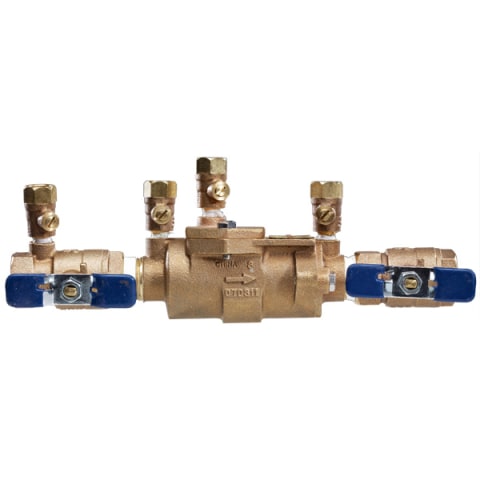
 0122965 LF850U-QT 1 Inch Lead Free Bronze Double Check Valve Backflow Preventer Assembly


 Out of stock
 Out of stock
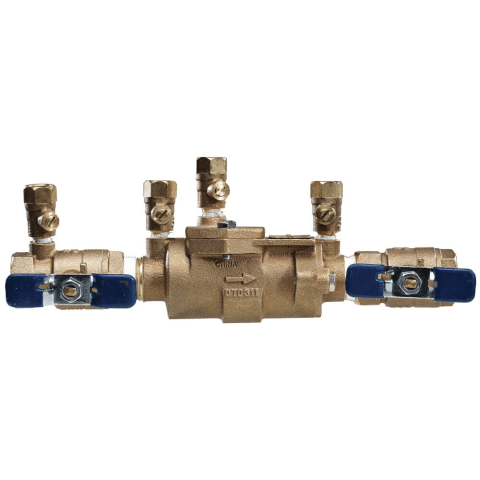 0683039 LF850-QT 3/4 Inch Lead Free Bronze Double Check Valve Backflow Preventer Assembly
 0683040 LF850-QT 1 Inch Lead Free Bronze Double Check Valve Backflow Preventer Assembly


.png)