Drip Irrigation










 Out of stock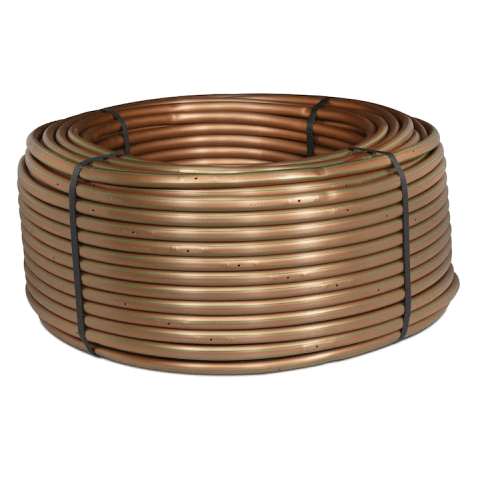






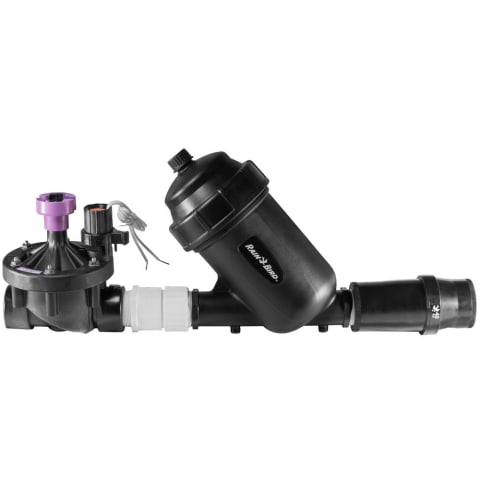
 XCZPGA100PRF: Medium Flow Control Zone Kit with 1 in. PGA Valve and 1 in. PR Filter (Assembled)
Rain Bird X10332
Out of stock
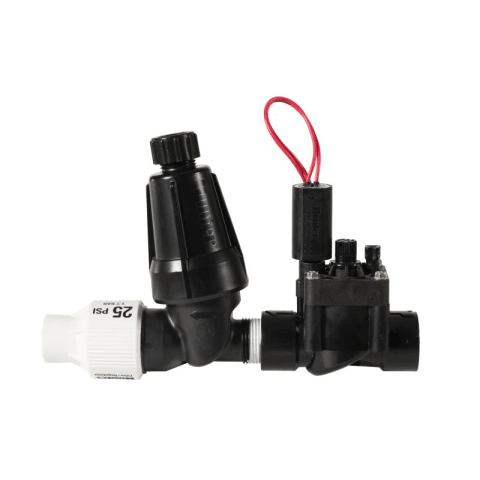


Start at the water source with a control zone. That is a valve paired with a filter and a pressure regulator. Drip runs at low pressure (typically 25–40 PSI), so a pressure regulator steps mains pressure down while the filter keeps grit out of the emitters.
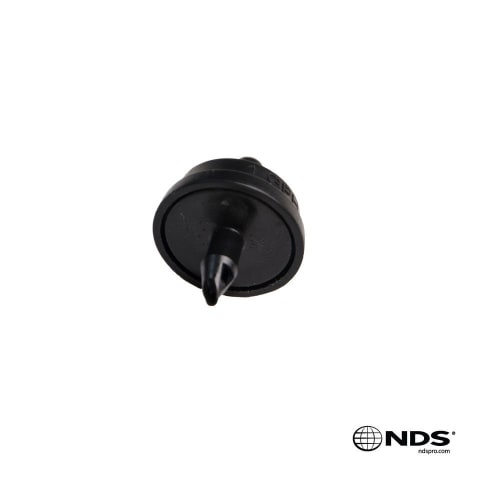
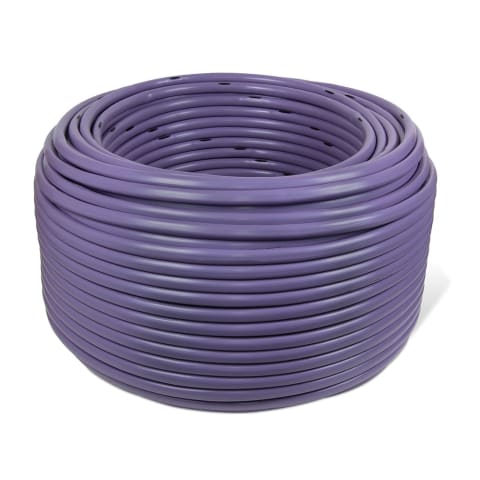
Run inline drip tubing along evenly spaced rows and hedges; use blank dripline with point-source emitters to water individual plants and containers. Match emitter flow to the plant: roughly 1 GPH for small plants, 2 GPH for shrubs. Keep each lateral within the tubing’s rated maximum run so the last emitter gets the same water as the first. On slopes, choose pressure-compensating emitters to hold output even from top to bottom.


Rain Bird X10332


A control zone kit packages the parts that condition water for drip at one point: a valve to switch the zone on, a filter to keep grit out of the emitters, and a pressure regulator to drop mains pressure to a drip-safe level.
Most drip emitters and dripline are rated for low pressure, commonly 25 to 40 PSI. House pressure is much higher, so a pressure regulator is required to protect the fittings and keep flow even across the zone.
Every dripline has a maximum run length set by its emitter spacing and flow rate; staying within it keeps the last emitter delivering the same water as the first. Pressure-compensating tubing holds output steady over longer runs and on slopes.
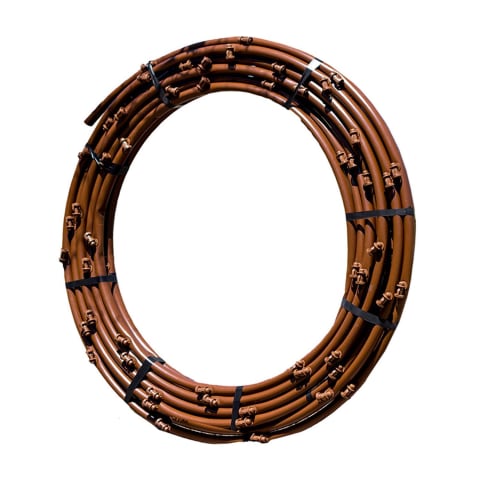
Use inline drip tubing where plants sit in evenly spaced rows or hedges. The emitters are built in at a set spacing. Use blank dripline with individual emitters to water spaced-out plants, trees, and containers where you place each one by hand.
Yes. A drip controller or hose-end timer opens the zone on a set schedule, so the system waters on its own. Early-morning runs lose the least water to evaporation.