

What a valve box actually does
A sprinkler valve box is a buried plastic enclosure that protects in-line irrigation valves and the wire splices that drive them. It does three jobs at once: keeps dirt, roots, and mulch out of the solenoid mechanism so the valve still actuates after a winter underground; gives the next person to touch the system room to put a wrench on a union without digging up the lawn; and keeps the valve assembly above the local frost line so the diaphragm and solenoid coil stay above freezing.
Pick the wrong box and one of those jobs breaks. A too-small box puts the wire nuts in contact with soil moisture. A box buried too shallow lets a winter freeze split the diaphragm. A drop-in lid in a kid-traffic backyard pops off when someone steps on it. Once the sizing math and the build grade are settled, the lid choice follows from where the box is going to live.
Sizing by valve count
Match the box footprint to the manifold layout, not the valve count alone. A two-valve manifold built tight on a brass tee fits a 10" round box; the same two valves on a longer PVC manifold with unions need a rectangular standard box. Plan for the manifold geometry, then size up one step if you want room for a future zone.
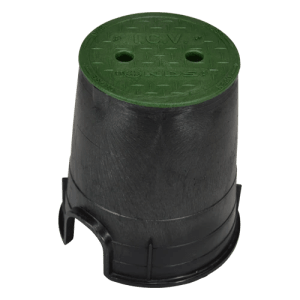
(1 valve, residential)

(1 valve, commercial)
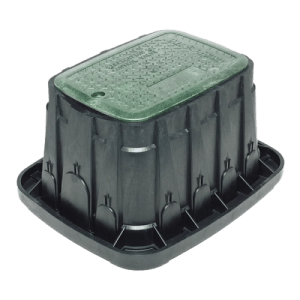
(2-3 valves)

(4+ valves)

(commercial)
| Valves on the manifold | Recommended box | Approx footprint | Example SKU |
|---|---|---|---|
| 1 valve (single-zone shutoff or anti-siphon hookup) | 6" round | ~6" diameter × 7" deep | NDS-58-1030 (6" round, green lid) |
| 1 valve (heavy commercial single, or wire splice only) | 10" round | ~10" diameter × 10" deep | RBD-58-1275 (10" round, green lid) or NDS-58-1903 (10" round, black lid) |
| 2 valves on a tight manifold | 10" round (square manifold) or 14"×19" rectangular standard | ~14"×19"×12" deep on the rectangular | NDS-58-8004 (14"×19" green Pro) |
| 2–3 valves on a longer PVC manifold | Rectangular standard | ~14"×19"×12" deep | RBD-58-1281 (standard rectangular, green lid) |
| 4 valves, or 3 valves plus room to grow | Rectangular jumbo | ~13"×20"×12" deep, larger access opening | RBD-58-1276 (jumbo, green lid) or NDS-58-8005 (13"×20" green Pro) |
Depth matters as much as footprint. A 10" round box is 10" deep — fine for a brass anti-siphon valve at grade, not deep enough to bury an in-line solenoid below the frost line in a climate where frost runs 8" or more. In cold regions, run the box deeper with an extension collar or step up to a standard rectangular (12" deep) instead of a round.
For reclaimed-water systems, switch the colorway: NDS and Rain Bird both stock purple boxes and lids that satisfy the AWWA/IAPMO marking convention for non-potable irrigation. Example: NDS-58-1759 (13"×20" purple).
Pro line vs Standard line: where the price gap goes
NDS sells valve boxes in two parallel lines. The Standard line is the residential-grade box most homeowners and one-zone DIY installs land on. The Pro line carries the same footprints in a heavier build aimed at commercial and pro-installer service. The SKUs marked "PRO" in the catalog name (NDS-58-8004, NDS-58-8005, NDS-58-1056, NDS-58-1059) sit in the Pro line; the unmarked NDS SKUs sit in the Standard line.
The price premium is the simplest signal of where the build difference goes. On the 13"×20" green-lid footprint, the Pro NDS-58-8005 lists at $147.99 against $117.99 for the Standard NDS-58-1758, a 25% premium on the same footprint in trade for a heavier-gauge box and lid assembly intended for direct-burial service in turf and traffic-adjacent installs.
When the Pro line is worth the premium: commercial sites, anywhere with foot traffic across the lid (driveways, walking paths, school-grounds installs), and any climate with hard freeze-thaw cycles where the lid needs to seat flush after several winters. When the Standard line is fine: backyard residential installs out of traffic, single-zone retrofit jobs, and any box that lives in mulch or planting beds rather than turf. For specific spec details (wall thickness, polymer formulation, lid attachment hardware), pull the current NDS Pro line product sheet, since spec details and lid hardware vary by model year.
Round vs rectangular
Round boxes are faster to install. A 10" diameter post-hole digger pulls a clean cylinder in under a minute on most soils; the box drops in, gets backfilled around the rim, and the job is done. Rectangular boxes need a shovel cut on four sides, more spoil to relocate, and more careful backfill to keep the box square.
Rectangular boxes earn their installation overhead by giving you room to grow. A standard rectangular has space along its long axis for a fourth zone on a manifold that started as a three-zone, with no second box dig. A round box that starts at capacity stays at capacity. For new construction with any chance of zone expansion, rectangular is the right default.
In turf, round boxes are also less visible. The round lid disappears into the lawn after a single mowing cycle; rectangular lids stay visible as the lawn fills around them. Cosmetics matter on residential front lawns where the box sits in the visual line from the street.
Lid color and traffic rating
Green lids blend into turf and are the residential default. Black lids match mulched beds, concrete pads, and dark hardscape borders. Purple lids mark reclaimed-water service per the AWWA convention; sand or tan blends into desert landscaping and decomposed-granite paths. The lid is one of the few visible parts of an irrigation system — pick it for the surface it lives in, not just for what is on the shelf.
For any install where vehicles cross the box (driveways, parking edges, commercial drive aisles), specify a box and lid rated to the AASHTO H-20 traffic load standard. H-20 means the assembly is engineered to take the design wheel load of a heavy truck; a residential drop-in lid will crack under the same load and dump turf, gravel, and water into the valve cavity. NDS publishes H-20 ratings on the Pro-Spec heavy-duty line; match that rating before backfilling in any drive surface.
Featured valve boxes in stock
The catalog below covers the most-common sizing decisions on residential and light-commercial installs. Stock changes; for the live list, see the Valves category page.
- Single valve, residential: NDS-58-1030 (6" round, black body, green lid), the entry-grade choice for an anti-siphon valve or a single in-line zone in mild climates.
- Single valve, commercial or cold-climate: RBD-58-1275 (10" round, green lid) or NDS-58-1903 (10" round, black lid).
- 2–3 valves on a manifold: RBD-58-1281 (standard rectangular) or the Pro-grade NDS-58-8004 (14"×19" green Pro).
- 4 valves or future expansion: RBD-58-1276 (jumbo) or the Pro-grade NDS-58-8005 (13"×20" green Pro).
- Reclaimed-water service: NDS-58-1759 (13"×20" purple).
- Replacement lids (existing boxes): NDS-58-1056 (10" round green Pro lid) and NDS-58-1059 (14"×19" green Pro lid).
Related categories
Once the box is sized, the rest of the manifold follows. Browse the Valves category for in-line solenoid valves, manifold fittings, and wire connectors that go inside the box; the Backflow Preventers category for the assembly that mounts upstream of the valve box on any system tied to municipal water.