How Sprinkler Valves Work
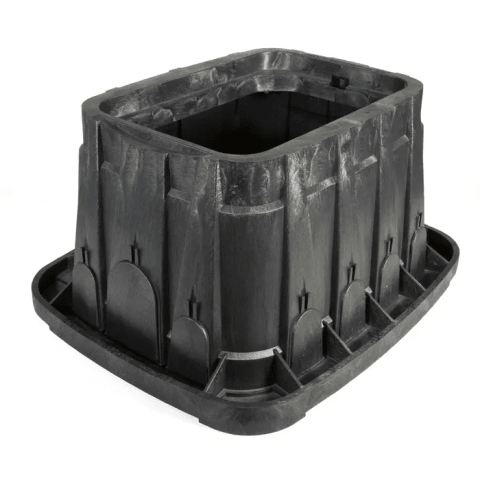
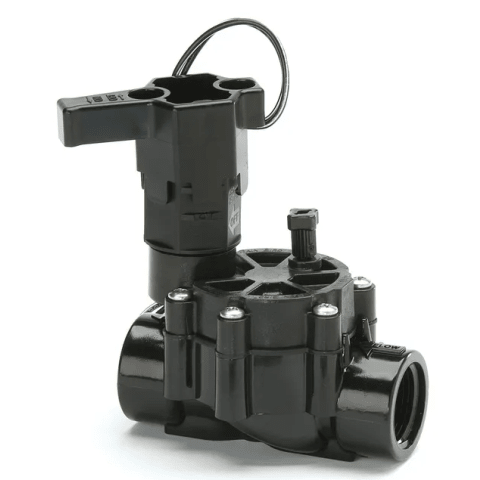
Your controller sends 24V to a valve’s solenoid, which opens it to water that zone, then closes it when the station ends. One valve per zone. In-line solenoid valves (also called control valves) do the automatic watering; anti-siphon valves add built-in backflow protection in the same body; and ball valves give you a reliable manual shut-off to isolate the system. Group the zone valves on a manifold inside a valve box for protected, serviceable access. Sizing the box? Read our How to Choose a Sprinkler Valve Box guide.
Valve FAQ
How does a sprinkler valve work?
A controller energizes the valve’s 24V solenoid, which lifts the diaphragm and lets water through to that zone. When the station time ends, the solenoid de-energizes and the valve closes. One valve controls one zone.
What size valve box do I need?
Match the box to the number and size of valves it covers. A single valve fits a round box, while a manifold of two or more needs a rectangular jumbo box with room to service each solenoid. Our valve box guide walks the sizing.
Globe or angle valve?
Both are in-line solenoid valves. A globe valve has the inlet and outlet in a straight line; an angle valve turns the flow 90°, which saves a fitting at the base of a manifold or where the supply comes up from below.
What is an anti-siphon valve?
An anti-siphon valve combines a zone valve with a built-in atmospheric vacuum breaker, so it both controls the zone and provides basic backflow protection. It must be installed at least 6 inches above the highest head and cannot be left under continuous pressure.
Ball valve or gate valve for a shut-off?
A ball valve opens and closes a quarter turn and seals reliably, which makes it the common modern choice for a mainline isolation point. Both isolate flow; ball valves are quicker to operate and less prone to seat wear.
Can you repair a sprinkler valve, or replace it?
A sprinkler valve that will not open or close is usually a bad solenoid or a torn diaphragm, not the whole valve. Replacing the solenoid or diaphragm fixes most failures and costs far less than a new valve. Replace the whole valve only when the body is cracked or the threads are stripped. We stock replacement solenoids, diaphragms, and valve repair kits alongside complete valves.





 On Sale
 Out of stock
 On Sale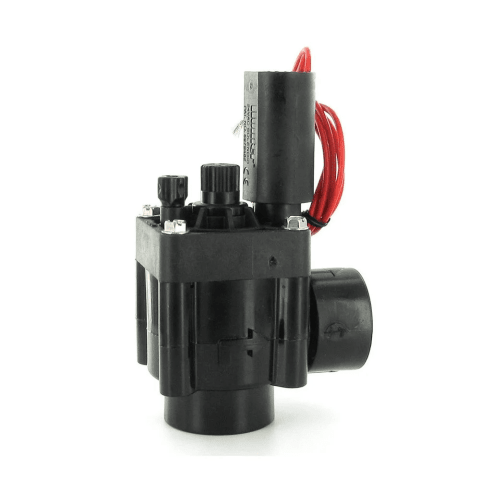


 100DVA - 1 in. DV Series Inline Plastic Residential Irrigation Valve - Angle Configuration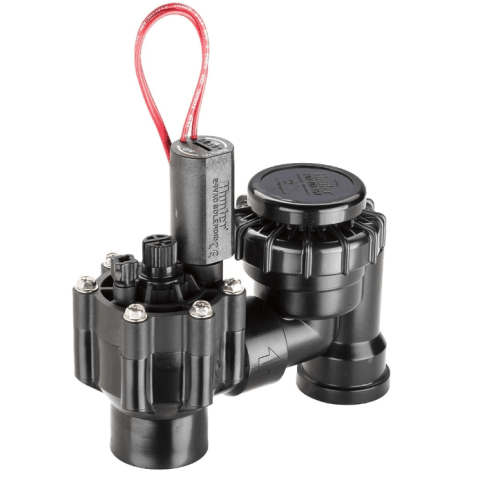
 Out of stock


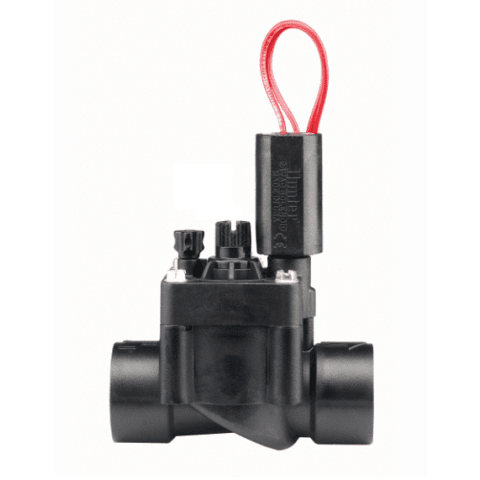
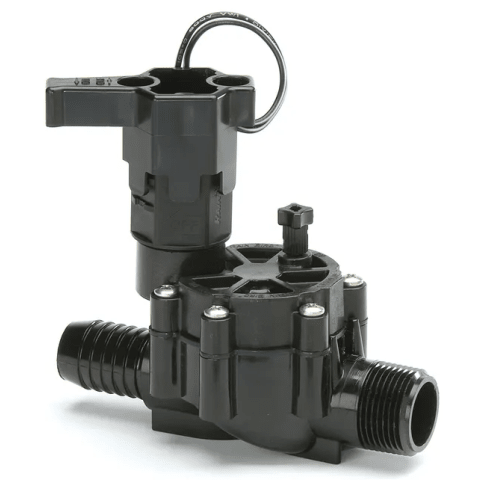 100DVMB - 1 in. DV Series Inline Plastic Residential Irrigation Valve - Male x Barb