

Shop Controllers by Brand
How to Choose a Sprinkler Controller
Start with station count — you need one station for each watering zone, plus a little room to expand, so count your zones before you buy. Modular controllers let you add station modules later as the system grows.
Then pick the cabinet and the smarts: indoor models mount in a garage or utility room, while outdoor models have a weather-resistant, lockable enclosure. A Wi-Fi “smart” controller adjusts run times from local weather and programs from your phone — handy where watering restrictions apply. New here? Our Hunter controller buying guide compares the X-Core, Pro-HC, and HCC families, and you can round out the install with controller accessories like sensors and modules.

Rain Bird ESPLXME2P
ESPLXME2P - Controller 12-station base unit expandable to 48 stations
Rain Bird F44224
ESP-TM2 - 4 Station Indoor/Outdoor 120V Irrigation Controller (LNK WiFi-compatible)
Hunter XC600I
XC-600i Indoor X-Core Controller, 6 Station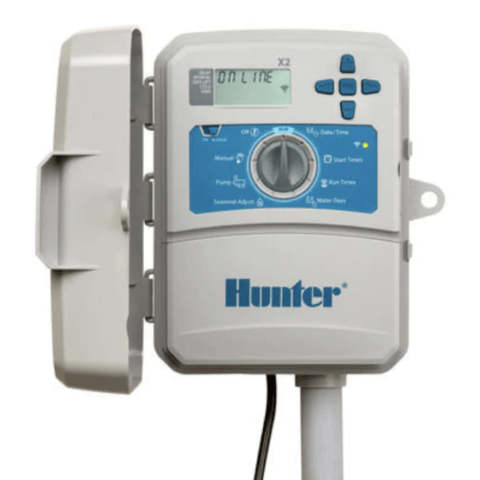
Hunter X2600
X2-600, 6-Station Controller Internal Transformer and Plug with Plastic Cabinet 120V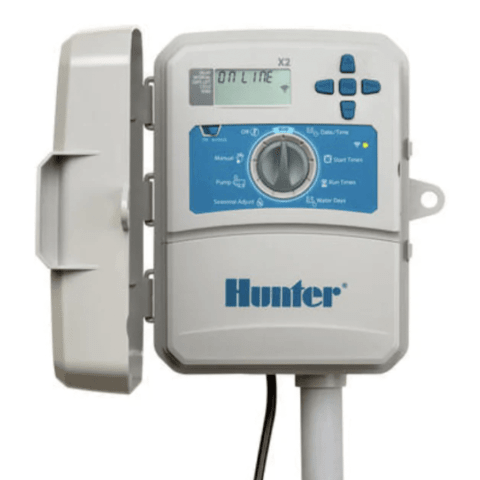
Hunter X2800
X2-800, 8-Station Controller Internal Transformer and Plug with Plastic Cabinet 120V
Hunter X2400
X2-400, 4-Station Controller Internal Transformer And Plug With Plastic Cabinet 120V
Rain Bird F44232
ESP-TM2-12, 12 Station ESP-TM2 Controller
Rain Bird F44228
8 Station ESP-TM2 120Volt Controller ESP-TM2-8
Hunter XC800I
XC-800i, X-Core Indoor Controller, 8 Station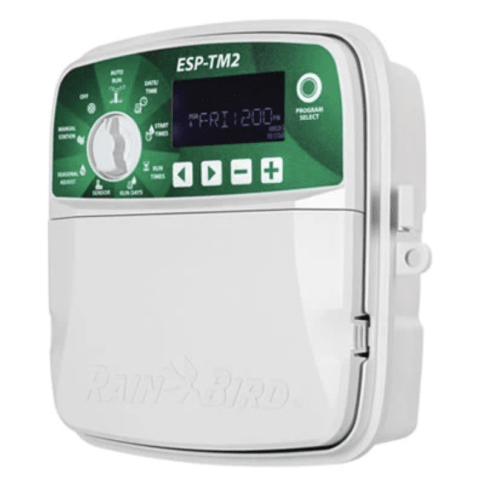
Rain Bird F44226
ESP-TM2-6, 6 Station ESP-TM2 120Volt ControllerOn Sale
Rain Bird F48342
ESP9V2, Battery-Operated Controller- 2-Zone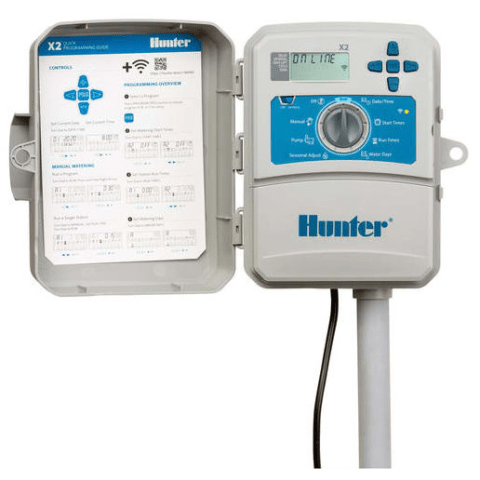
Hunter X21400
X2-1400, 14-Station Controller Internal Transformer and Plug with Plastic Cabinet 120V
Irritrol KD600-INT
KD600-INT, 6 Station KD2 Indoor Controller
Irritrol RD900-INT-R
RD900-INT-R, Rain Dial R Series 9 Station Indoor ControllerOn Sale
Irritrol RD600-INT-R
RD600-INT-R, Rain Dial R Series 6 Station Indoor Controller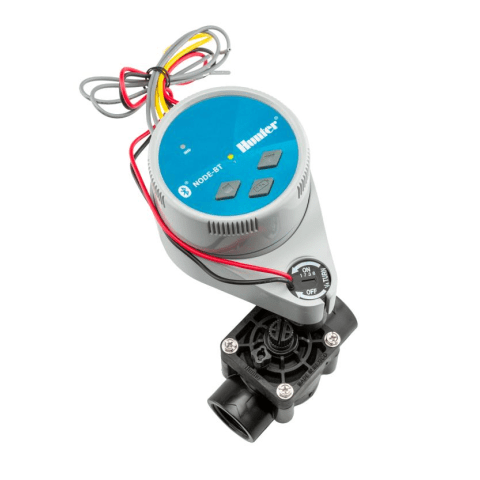
Hunter NODEBT100VALVE
Single-Station Bluetooth Battery Controller With PGV-101G Valve
Irritrol RD600-EXT-R
RD600-EXT-R, Rain Dial R Series 6 Station Outdoor Controller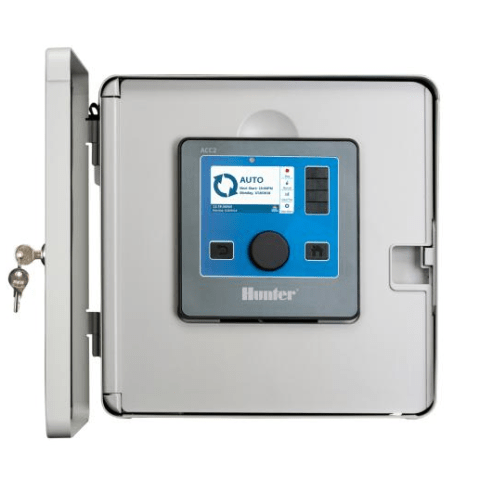
Hunter A2C75DM
A2C-75D-M, 75-Station ACC2 Decoder Controller Metal Cabinet
Rain Bird F22100
ESPLXME2 - Controller 12-station base unit expandable to 48 stations
Irritrol RD1200-EXT-R
Rain Dial R Series 12 Station Outdoor Controller


No product found!
Sprinkler Controller FAQ
How many stations (zones) do I need?
One station for each watering zone. Count your zones and choose a controller with a few extra stations so you can expand later — modular models let you add station modules as the system grows.
Indoor or outdoor controller?
Indoor models mount in a garage or utility room. Outdoor models have a weather-resistant, lockable cabinet rated for mounting outside — match the controller to where you’ll install it.
What is a smart (Wi-Fi) controller?
A Wi-Fi controller adjusts run times automatically from local weather data and lets you program it from your phone. It can help meet local watering restrictions and trim water use compared with a fixed schedule.
Can I replace my controller without rewiring?
Usually yes. Label each zone wire first, then move each one to the matching station terminal on the new controller and keep the common wire on the COM terminal. The valves and field wiring stay as they are.
Do I need a rain sensor?
Many areas require a rain or soil-moisture sensor that pauses watering after rain; a smart controller can use live weather data instead. Add one from controller accessories.
Try these related searches